Hong Kong incorporation fee & Aspire
 cashback.


Table of Contents
Under the Hong Kong tax system, income is taxed on a territorial basis, meaning only income sourced in or derived from Hong Kong is subject to tax. This makes Hong Kong attractive to residents, expats, freelancers, and business owners looking for a transparent and efficient tax environment. Understanding personal income tax Hong Kong rules is essential for anyone earning income locally, as proper compliance helps avoid penalties and ensures accurate reporting of taxable income.
The Inland Revenue Department (IRD) supports compliance through the eTAX platform, allowing taxpayers to file their income tax return online with ease. However, timely submission and correct documentation remain critical, as late or incorrect filings may result in fines or additional assessments. This guide provides a practical overview of Hong Kong income tax system to help individuals and businesses understand their obligations and manage tax matters with confidence.
What is Hong Kong income tax?
Hong Kong income tax is based on a simple and transparent framework known as territorial taxation Hong Kong applies. Under this principle, only income sourced in or derived from Hong Kong is subject to tax, regardless of the taxpayer’s residency status. Income earned outside Hong Kong is generally not taxable, even if it is remitted into Hong Kong. This approach is a key reason why Hong Kong is considered a highly attractive jurisdiction for both individuals and businesses.
Personal income tax Hong Kong is mainly imposed through Salaries Tax, which applies to individuals earning income from employment, offices, or pensions arising in Hong Kong. Key features of Salaries Tax include:
- Tax assessed under either progressive tax rates or a standard rate, whichever results in a lower liability
- Availability of personal allowances and deductions to reduce taxable income
- Application to residents, expats, and employees working in Hong Kong
For businesses, Hong Kong income tax is levied in the form of Profits Tax. This applies to profits generated from a trade, profession, or business carried on in Hong Kong, and follows the same territorial principle:
- Only Hong Kong-sourced profits are taxable
- Offshore profits may qualify for tax exemption if properly substantiated
In addition to Salaries Tax and Profits Tax, the Hong Kong tax system includes:
- Property Tax on rental income from properties located in Hong Kong
- No VAT or GST, reducing indirect tax costs
- No estate duty or inheritance tax, supporting long-term wealth planning
These elements collectively make the Hong Kong income tax system straightforward, predictable, and business-friendly.
Who must pay Hong Kong income tax?
Under the Hong Kong personal income tax framework, both residents and non-residents may be required to pay tax if their income arises in or is derived from Hong Kong. This territorial approach means that simply living outside Hong Kong does not automatically exempt an individual from tax obligations.
For Hong Kong residents, income earned from employment, offices, or pensions sourced in Hong Kong is generally subject to Salaries Tax. Residents with offshore income are usually not taxed, provided the income is genuinely sourced outside Hong Kong.
For non-residents, tax liability depends on the nature of their employment and the duration of their stay. A key exemption is the 60-day rule, under which individuals who visit Hong Kong for no more than 60 days in a tax year and earn income from non-Hong Kong employment may be exempt from Salaries Tax. However, this exemption does not apply to directors’ fees or income derived from Hong Kong employment.
Key groups commonly subject to Hong Kong income tax include:
- Employees earning salaries or wages from Hong Kong-based employment
- Expats and foreign professionals, depending on employment source and time spent in Hong Kong
- Freelancers and self-employed individuals earning income from services provided in Hong Kong
- Business owners and partners receiving income tied to Hong Kong operations
Hong Kong income tax for foreigners follows the same rules applied to local taxpayers, with no separate tax regime based on nationality. Understanding how employment source, length of stay, and income type affect Hong Kong personal income tax liability is essential to ensure compliance and avoid unexpected assessments or penalties.
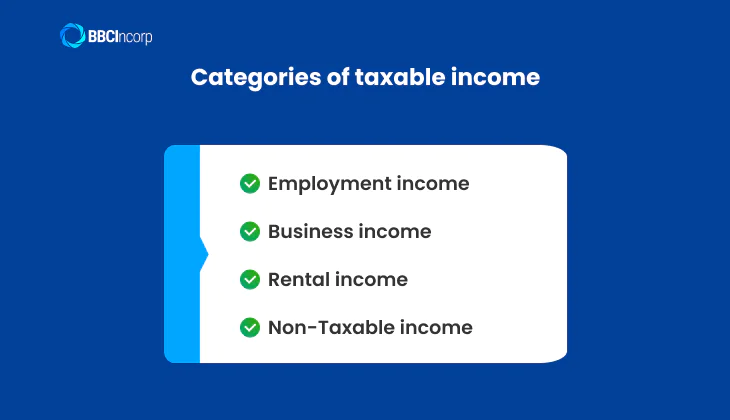
Categories of taxable income
Hong Kong income tax is applied based on the nature and source of income, in line with the city’s territorial taxation principle. Understanding which income types fall under personal income tax and which qualify as non-taxable income Hong Kong recognizes is essential for accurate reporting and compliance.
Employment income
Employment income is subject to Salaries Tax under the Hong Kong income tax system. This includes income arising from employment exercised in Hong Kong, such as:
- Salaries and wages paid by employers
- Bonuses, commissions, and performance incentives
- Allowances, including housing, education, or cost-of-living benefits
- Director fees, which are taxable regardless of where services are performed
These income items must be reported under personal income tax, with deductions and personal allowances applied where applicable.
Business income
Business income is taxed under Profits Tax rather than Salaries Tax. This applies to income generated from carrying on a trade, profession, or business in Hong Kong, including:
- Sole proprietors earning profits from self-operated businesses
- Partnerships generating income from joint business activities
- Corporations earning profits from Hong Kong-based operations
Only profits sourced in or derived from Hong Kong are taxable. Offshore profits may qualify for exemption if sufficient documentation is provided to the Inland Revenue Department.
Rental income
Rental income from properties located in Hong Kong is subject to Property Tax. Tax is assessed on the net assessable rental value, calculated after deducting rates paid by the owner and a statutory allowance for repairs and outgoings.
Non-Taxable income
Certain income types are generally excluded from Hong Kong income tax, including:
- Dividends received from Hong Kong companies
- Capital gains from the disposal of investments or assets
- Interest income, except in limited circumstances
Understanding taxable and non-taxable income Hong Kong distinguishes helps individuals and businesses manage personal income tax obligations effectively.
Hong Kong personal income tax (salaries tax) explained
Hong Kong personal income tax is mainly imposed through Salaries Tax, which applies to income earned from employment, offices, or pensions arising in or derived from Hong Kong.
Salaries tax rates and thresholds
Hong Kong applies progressive salaries tax rates ranging from 2% to 17%, calculated on net chargeable income after personal allowances. The progressive brackets increase step by step, with the highest marginal rate capped at 17%, making the overall tax burden relatively low compared to many other jurisdictions.
It is important to distinguish between two key income concepts:
- Net income: Total assessable income minus allowable deductions
- Net chargeable income: Net income minus personal allowances
The IRD will assess tax under two methods and apply whichever results in a lower tax payable:
- Progressive tax rates on net chargeable income, or
- The standard tax rate of 15% on net income (before personal allowances)
In practice, the standard rate typically applies to higher-income individuals whose personal allowances do not significantly reduce taxable income. For a clearer breakdown of how the salary tax rate in Hong Kong works in real-world scenarios, readers may refer to this detailed guide.
Allowances and deductions
Personal income tax Hong Kong offers a wide range of allowances and deductions that help reduce taxable income. Common personal allowances include the basic allowance, married person’s allowance, child allowance, dependent parent or grandparent allowance, single parent allowance, and disabled dependent allowance.
Additionally, taxpayers may claim various tax deductions Hong Kong recognizes, such as mandatory MPF contributions, self-education expenses related to employment, home loan interest for owner-occupied property, approved charitable donations, and domestic rent deductions. When applied correctly, these benefits can significantly lower net chargeable income and overall salaries tax liability.
Filing process and deadlines
The Individual Tax Return (Form BIR60) is issued annually, usually in early May, and must generally be filed within one month in line with the Hong Kong income tax filing deadline. Taxpayers can submit their income tax return online via the eTAX system or by paper filing.
Employees leaving Hong Kong permanently may need to obtain a tax clearance certificate, with employers required to notify the IRD in advance. Late or non-filing may lead to penalties, additional assessments, or prosecution. If an assessment is disputed, taxpayers may lodge an objection within the prescribed timeframe, supported by relevant documentation.
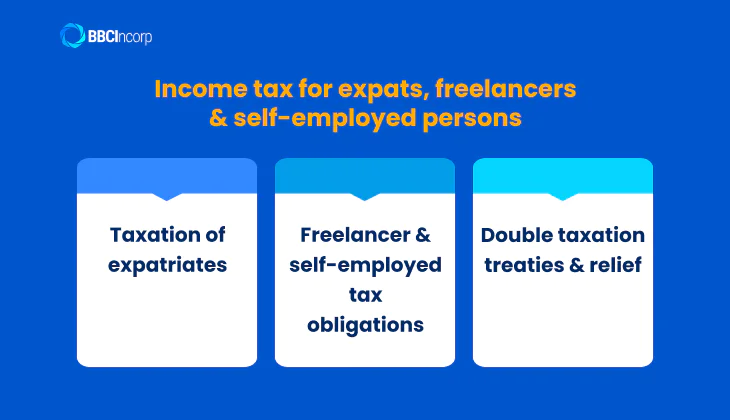
Income tax for expats, freelancers, and self-employed persons
This is governed by the same territorial taxation principles applied to local taxpayers. Nationality or residency status does not in itself determine tax liability. Instead, the key factor is whether income is sourced in or derived from Hong Kong.
Taxation of expatriates
Under the territorial system, expatriates are subject to Hong Kong salaries tax only if their employment income arises in or is derived from Hong Kong. Foreigners working in Hong Kong are taxed in the same manner as local employees, with no separate tax regime based on citizenship. Income earned outside Hong Kong is generally not taxable, even if it is remitted into the city.
A key exemption relevant to expatriates is the 60-day rule. Individuals may be exempt from Hong Kong income tax if:
- They stay in Hong Kong for no more than 60 days during the tax year
- Their income is derived from non-Hong Kong employment
Freelancer and self-employed tax obligations
Freelancers and self-employed individuals are generally taxed under Profits Tax, not personal income tax Hong Kong. Self-employment typically refers to carrying on a trade, profession, or business independently, such as consultants, designers, IT professionals, or independent contractors. This required to:
- File a Profits Tax Return if operating as a sole proprietor or partnership
- Declare profits derived from Hong Kong after deducting allowable business expenses
- Maintain proper accounting records to support income and expense claims.
Double taxation treaties and relief
Double taxation relief Hong Kong provides is supported by a wide network of Comprehensive Double Taxation Agreements (DTAs). These treaties allocate taxing rights between jurisdictions and help prevent income from being taxed twice.
Relief may be available in the form of:
- Foreign tax credits for tax paid overseas
- Treaty-based exemptions for certain types of income
To claim relief, taxpayers must meet eligibility requirements and submit supporting documentation to the IRD. Understanding how DTAs apply is essential for expats, freelancers, and self-employed persons with cross-border income.
By understanding Hong Kong income tax for expats, freelancer tax Hong Kong obligations, and self-employed tax Hong Kong rules, individuals can stay compliant while managing their tax exposure efficiently.
Corporate income tax (profits tax) basics
Hong Kong corporate tax is levied in the form of Profits Tax, which applies to profits arising in or derived from Hong Kong from a trade, profession, or business. Consistent with the territorial principle, only Hong Kong-sourced profits are taxable, while offshore profits may be exempt if sufficient evidence is provided.
Two-tiered profits tax rates explained
Hong Kong adopts a two-tiered profits tax system to support small and medium-sized enterprises. Under this regime, tax rates are applied as follows:
- Corporations: 8.25% on the first HK$2 million of assessable profits, and 16.5% on the remaining profits
- Unincorporated businesses (sole proprietorships and partnerships): 7.5% on the first HK$2 million, and 15% thereafter
To prevent abuse, only one entity within a group of connected entities may apply the two-tiered rates. Other group members must be taxed at the standard rate, based on a group nomination rule filed with the Inland Revenue Department.
Special tax incentives and exemptions
Hong Kong offers several targeted tax concessions to enhance competitiveness, including:
- Patent box regime, taxing qualifying IP income at a reduced rate of 5%
- Ship leasing and shipping-related concessions to support the maritime industry
- Preferential tax treatment for reinsurance businesses and corporate treasury centers
In addition, the FSIE (foreign-sourced income exemption) regime governs the taxation of certain offshore income, such as dividends, interest, and disposal gains received in Hong Kong. Under the FSIE regime, exemptions may apply if economic substance, participation, or nexus requirements are satisfied.
Property tax and other taxes in Hong Kong
Under the rental income tax Hong Kong framework, tax is imposed at a flat rate of 15% on the net assessable rental value. This value is calculated after deducting government rates paid by the owner and a statutory allowance for repairs and outgoings, ensuring the tax base reflects net rental income rather than gross receipts.
Property tax generally applies where rental income is earned on a passive basis and does not form part of a broader property-related business. When rental activities are carried out as part of a trade or business, the income may instead fall within the scope of profits tax, which allows a different method of assessment based on net business profits.
Penalties and risks for late or incorrect filing
Late or incorrect filing under Hong Kong personal income tax can lead to financial penalties and interest charges on unpaid tax. The Inland Revenue Department (IRD) may also issue additional or estimated assessments if returns are incomplete or inaccurate, which can result in higher tax liabilities. Persistent non-compliance or deliberate errors may even trigger prosecution.
Accurate and timely filing is essential to minimize late filing penalties and avoid unnecessary scrutiny. Ensuring proper documentation, supporting deductions and exemptions, and submitting returns on time helps individuals and businesses stay compliant and reduces the risk of audits, additional assessments, or complications in future tax matters such as refunds or tax clearance.
Tools and resources for tax planning
For effective Hong Kong personal income tax planning, several tools and resources are available. The HK income tax calculator allows individuals to estimate their tax liability quickly and compare the impact of different deductions and allowances. Online options, including the Hong Kong income tax calculator and personal income tax calculator, provide easy access for taxpayers to plan ahead.
The Inland Revenue Department offers official resources, including downloadable guides and instructions, covering tax rates, allowances, and filing procedures. For convenient and streamlined submission, the eTAX portal enables taxpayers to file returns electronically, track progress, and manage tax accounts efficiently.
Tax compliance support and advisory services
Tax service providers Hong Kong offer expert assistance with the preparation and filing of both personal and corporate tax returns, ensuring accuracy and compliance with the IRD requirements. Professional support reduces the risk of errors, late submissions, and penalties.
Expert tax filing services
These services help individuals and businesses prepare and file tax returns efficiently. Professional support ensures compliance with deadlines, correct application of deductions, and minimizes the risk of penalties. Both personal and corporate filings are covered, providing peace of mind for clients managing complex financial situations.
Personalized tax consultation
Professional tax advisory Hong Kong services offer tailored guidance for expats, freelancers, and business owners. This includes tax planning, claiming eligible deductions, managing cross-border income, and structuring business operations for efficiency. Experts can also represent clients before the IRD, handle inquiries, and address disputes to ensure smooth compliance.
For businesses seeking integrated support, partnering with a reliable accounting service provider like BBCIncorp ensures both tax compliance and comprehensive accounting services under one roof. Leveraging professional expertise allows individuals and companies to focus on growth while maintaining confidence in their Hong Kong tax obligations.
Hong Kong’s income tax system stands out for its simplicity, territorial basis, and competitive rates, making it ideal for residents, expats, freelancers, and businesses. From Hong Kong income tax on personal earnings to corporate profits tax and property tax, understanding obligations, allowances, and filing requirements is essential to remain compliant and optimize tax benefits.
For seamless compliance and effective Hong Kong tax planning, leveraging professional expertise is highly recommended. Partnering with a reliable accounting service provider like BBCIncorp offers tailored tax advisory, filing support, and planning strategies for both individuals and businesses.
Frequently Asked Questions
What deductions reduce my taxable income?
Hong Kong allows various deductions to lower your taxable income. Common deductions include mandatory MPF contributions, self-education expenses, home loan interest, charitable donations, and domestic rent deductions. Claiming these deductions properly can significantly reduce your net chargeable income.
How does Hong Kong treat income from remote or hybrid work arrangements?
Income from remote or hybrid work is generally assessed based on whether the employment is sourced in Hong Kong. If a portion of your work is performed outside Hong Kong, that portion of income may be exempt, subject to IRD rules and proper allocation.
How do double tax agreements (DTAs) affect Hong Kong income tax?
Hong Kong has entered into DTAs with various jurisdictions to prevent double taxation. These agreements determine which country has taxing rights and may allow taxpayers to claim foreign tax credits or exemptions on income taxed abroad.
Disclaimer: While BBCIncorp strives to make the information on this website as timely and accurate as possible, the information itself is for reference purposes only. You should not substitute the information provided in this article for competent legal advice. Feel free to contact BBCIncorp’s customer services for advice on your specific cases.
Industry News & Insights
Get helpful tips and info from our newsletter!
Stay in the know and be empowered with our strategic how-tos, resources, and guidelines.