Hong Kong incorporation fee & Aspire
 cashback.


Table of Contents
Hong Kong has firmly established itself as a leading hub for MNC company headquarters across Asia. Its strategic location at the heart of the region provides quick access to Mainland China and the broader Asia‑Pacific market, making it an ideal base for multinational corporation Hong Kong operations.
The city’s pro‑business environment, transparent legal framework, and political stability offer multinational firms the credibility and confidence they need. Combined with a competitive tax regime — a two‑tier profits tax system (8.25 % on the first HK$2 million, 16.5 % above that), no VAT, no capital gains tax, and no withholding tax on dividends — Hong Kong remains highly attractive for MNC companies in Hong Kong.
This article delves into the meaning of a multinational corporation, showcases examples of leading MNC companies in Hong Kong, outlines typical corporate structures and benefits, and provides guidance for establishing a multinational corporation Hong Kong office.
Key takeaways:
- Hong Kong is a strategic hub for MNC companies, offering connectivity, low taxes, and a pro-business environment.
- Multinational corporations operate with regional headquarters, branch offices, or subsidiaries to balance global control and local adaptation.
- Key industries include finance, trade, logistics, and technology, driving economic growth and innovation.
- MNCs benefit from skilled talent, capital access, and regulatory transparency, while navigating high costs and compliance obligations.
- Partnering with experts like BBCIncorp simplifies setup, compliance, and international expansion.
What is an MNC company?
Before exploring why so many global firms choose Hong Kong as their base, it is important to understand what an MNC company is and how it fits into today’s international business landscape.
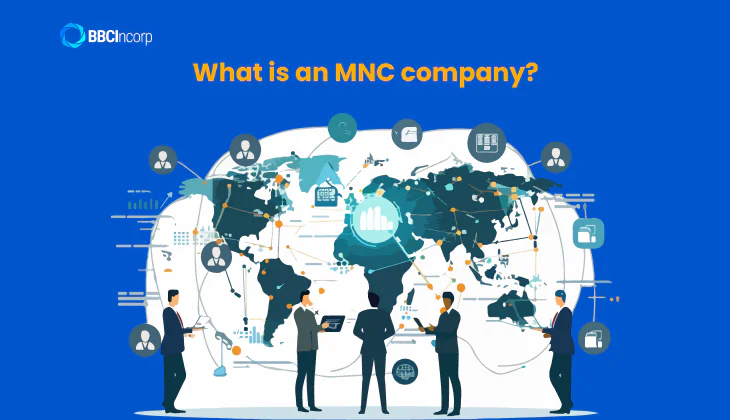
The term multinational corporation (MNC) refers to a company that operates in more than one country, with a parent entity in its home jurisdiction and foreign subsidiaries or branches in multiple markets. This multinational corporation definition highlights two core elements: centralised strategic control and cross-border commercial presence.
An MNC differs significantly from a local enterprise. While a local business focuses on serving its domestic market, an MNC invests capital abroad, establishes overseas offices or production facilities, and manages global operations through a coordinated structure.
This network allows the company to access diverse markets, source talent internationally, optimise supply chains, and scale more efficiently. Understanding this MNC meaning helps explain why multinational groups often outpace purely domestic firms.
Hong Kong plays a prominent role in the growth of multinational companies in Asia. Many MNC companies in Hong Kong choose the city not only as a sales office but as a fully fledged regional headquarters.
Its transparent legal system, globally recognised financial institutions, and efficient regulatory environment provide a reliable platform for international expansion. As a result, the phrase multinational corporation Hong Kong has become closely associated with regional leadership and cross-border coordination.
Beyond commercial presence, MNCs contribute significantly to Hong Kong’s economic development. Their operations bring foreign direct investment, create high-skilled employment, introduce advanced management practices, and strengthen the city’s position as a global business hub.
They also support the flow of goods, capital, and innovation between Hong Kong, Mainland China, and the wider Asia-Pacific region.
This foundation offers important context for businesses exploring how MNC structures work and why Hong Kong remains a preferred environment for global expansion.
Key features of MNC
To identify the core characteristics of an MNC, it is helpful to look at the elements that shape a global business structure and distinguish multinational firms from domestic enterprises.
A primary feature of a multinational corporation is global operations across multiple markets. An MNC runs subsidiaries, branches or affiliates in several countries, enabling it to serve international customers and participate in different economic regions. This cross-border footprint allows the company to diversify revenue sources and strengthen resilience.
Another defining trait is the combination of centralized management and decentralized operations. Strategic direction, corporate policies and overall governance are set at headquarters, while each regional or local entity manages daily activities. This structure supports consistent decision-making at the top while giving individual markets the flexibility needed to address local conditions.
MNCs also engage in large-scale investment and the adoption of advanced technology. With access to significant global resources, these companies build high-value assets, invest in research and development, and deploy modern systems that enhance productivity. Their ability to invest at scale gives them a competitive edge in innovation and efficiency.
A further feature is global branding paired with local market adaptation. While the brand maintains a unified global identity, products, services and marketing approaches are adapted to meet the expectations and cultural preferences of each region. This balance allows MNCs to remain globally recognizable yet locally relevant.
In Hong Kong, companies such as HSBC and Swire Pacific clearly demonstrate these features of multinational corporation operations. HSBC leverages a global banking framework while tailoring its services to Asian markets. Swire Pacific manages diversified international businesses with consistent corporate oversight yet strong regional autonomy.
These characteristics of MNC companies highlight how multinational firms build scale, maintain coherence and remain competitive across global markets.
Why Hong Kong is a top destination for MNC companies
Multinational corporations continue to choose Hong Kong as their regional base due to its blend of strategic access, predictable governance and highly developed business infrastructure. These strengths make the city one of the most attractive locations in Asia for managing a global business structure and coordinating cross-border operations.
Strategic location and business-friendly policies
Hong Kong’s position at the centre of Asia places MNC companies within immediate reach of Mainland China and the wider Asia-Pacific region. Major markets such as Shenzhen, Guangzhou, Singapore, Seoul and Tokyo are accessible within short flight times, allowing MNCs to manage supply chains, trade and decision-making more efficiently.
This geographic advantage consistently ranks as a top factor for foreign investment in Hong Kong.
The city’s tax regime further enhances its appeal. Hong Kong applies a simple territorial tax system with a low corporate profits tax rate and a two-tier structure that benefits smaller entities. The absence of VAT, capital gains tax and withholding tax on dividends helps MNC companies lower their operational costs.
In addition, Hong Kong maintains a free-trade policy and permits full foreign ownership, allowing multinational enterprises to establish wholly owned subsidiaries without local partners. These business-friendly conditions create a flexible and predictable environment for foreign firms expanding into the region.
Robust infrastructure and international connectivity
Hong Kong’s infrastructure is designed to support large-scale, high-speed international operations. Hong Kong International Airport, one of the world’s busiest cargo hubs, pairs with a deep-water port and efficient logistics network to facilitate smooth regional movement of goods.
The MTR system and extensive transport links ensure seamless mobility for employees and business partners.
As a global financial centre, Hong Kong also offers access to major international banks, capital markets and a deep pool of professional talent across finance, legal services and corporate advisory.
Its common law-based legal system provides reliability and strong intellectual property protection, giving multinational firms the security needed to manage regional operations from a stable base.
These combined advantages position Hong Kong as a premier destination for MNC companies seeking scale, connectivity and long-term strategic value in Asia.
Types and structures of MNC companies in Hong Kong
MNCs in Hong Kong adopt various organisational models based on their goals, from building a regional hub to establishing standalone entities. Here are the main structures, their governance traits, and the industries where they operate most successfully.
Common operational models
MNCs in Hong Kong typically operate under one of several models.
- Regional headquarters: Many multinational firms designate their Hong Kong office as a regional headquarters to coordinate operations across the Asia-Pacific region. This type of headquarters may oversee strategy, finance, regional sales, supply-chain management, and act as a hub for subsidiary oversight throughout Asia.
- Branch offices: A branch office allows a parent company to have a presence in Hong Kong without establishing a separate legal entity. It enables the company to serve clients or conduct business in the city while remaining fully tied to the parent organization.
- Subsidiaries: Subsidiaries are legally independent companies incorporated under Hong Kong law but owned by the parent multinational corporation. They can operate under local regulations, enter contracts, hire staff, and hold assets independently, while still being controlled by the parent.
These models provide flexibility for MNC companies in Hong Kong, allowing them to determine the level of presence, liability, and autonomy that best fits their global business structure.
Management and ownership structures
MNCs also vary in management and governance approaches. Some use a centralized model, where strategic decisions such as global branding, major investments, corporate policies, and high-level financial planning are made at the parent company or global headquarters. Local offices or subsidiaries implement these directives to maintain consistency.
Other companies favor a decentralized model, giving regional or local teams in Hong Kong significant autonomy to respond to market conditions, manage staff, adjust products or services, and make operational decisions.
Subsidiaries in Hong Kong must comply with local corporate governance standards and regulations, including registration, financial reporting, tax filings, and employment law. Compliance ensures transparency, accountability, and alignment with local requirements, which is an important part of multinational corporation structure.
Major industries dominated by multinational corporations in Hong Kong
Hong Kong’s role as a global business hub has attracted MNCs across a range of sectors. Among the most prominent are:
- Finance and banking: As a global financial hub, the city hosts international banks, investment firms, and financial institutions. Its advanced financial infrastructure, mature capital markets, and strong regulatory framework support regional finance centers, treasury functions, and cross-border capital flows.
- Trade and logistics: With a strategic location, world-class ports, airport, and integrated transport network, Hong Kong is a major hub for importing, exporting, and distributing goods. These advantages benefit multinational trade companies, logistics MNCs, and supply-chain operators requiring efficient regional and global reach.
- Technology and innovation: Hong Kong’s government initiatives, startup ecosystem, and research institutions have attracted international tech companies and global R&D operations. Tech MNCs leverage local talent, connectivity, and a business-friendly environment to support projects in fintech, software development, research collaborations, and technology services.
The combination of flexible structures, strong legal governance, and industry-specific advantages makes Hong Kong a preferred location for MNC companies seeking to manage their Asia-Pacific operations efficiently.
Examples of major MNC companies in Hong Kong
Several global corporations have established their headquarters or major offices in Hong Kong, leveraging the city’s strategic advantages as part of their Asia‑Pacific operations. Below are prominent examples of such multinational corporations in Hong Kong.
HSBC Holdings stands out as a major banking and finance MNC in Hong Kong. As one of the world’s largest banking groups, HSBC uses its Hong Kong presence to manage global banking operations, regional financing, wealth management and cross‑border capital flows for Asia.
The city’s robust financial infrastructure and international connectivity support HSBC’s complex multinational requirements, making it a key example of global corporation Hong Kong headquarters.
Swire Pacific is another leading example. As a diversified multinational corporation, Swire Pacific operates in aviation (through airline investments), real estate, beverages and trading.
Its long‑standing base in Hong Kong enables it to coordinate diverse business lines across the region while benefiting from Hong Kong’s favorable regulatory, legal and business environment.
Procter & Gamble (P&G) also relies on Hong Kong as a regional hub for marketing, regional management and product adaptation for Asia‑Pacific markets. This presence allows the company to tailor products and marketing strategies to regional consumer preferences while using Hong Kong as a stable and business-friendly base.
Global technology giants such as Microsoft and Apple maintain substantial operations and regional offices in Hong Kong. Using the city’s connectivity, legal stability and skilled workforce, these companies can coordinate Asia‑Pacific operations, manage supply chains and adapt products for diverse regional markets.
These examples of MNC companies in Hong Kong demonstrate how global corporations leverage the city’s strategic advantages for expansion and regional coordination.
The combination of financial infrastructure, regulatory stability, connectivity, and a favorable business environment enables multinational firms to manage Asia‑Pacific operations efficiently and securely.
Advantages and challenges of an MNC in Hong Kong
Operating an MNC in Hong Kong offers a mix of compelling benefits and real-world challenges. This section reviews what multinational organizations gain and what they must carefully manage to succeed in this dynamic city.
Advantages of multinational companies
One of the primary advantages is the competitive tax rates and relatively simple filing procedures. Hong Kong’s corporate tax regime offers low profits tax and a straightforward system, which helps MNCs reduce overhead and simplify compliance. As a result, multinational entities enjoy cost-efficient operations compared with many other global financial hubs.
Another notable benefit is access to capital and global financial markets. As a major international financial centre, Hong Kong hosts global banks, capital markets, asset managers and other financial institutions.
MNCs can use this ecosystem for financing, treasury services, cross-border capital flows and investment, providing a strong foundation for regional expansion and global business operations.
Hong Kong also offers political stability and an international reputation. Its legal and regulatory environment is widely respected for transparency and adherence to the rule of law, which builds trust among international business partners and stakeholders. This stability supports MNCs that rely on predictable business conditions for long-term planning and cross-border operations.
Finally, the city provides a highly skilled bilingual workforce. Many professionals in Hong Kong are proficient in English and Chinese and bring international experience, which is beneficial for MNCs operating across multiple Asia-Pacific markets. This talent pool helps multinational companies tailor operations to local markets while maintaining global standards.
Challenges faced by MNCs in Hong Kong
Despite these advantages, Hong Kong presents certain challenges for multinational firms. One major concern is the high cost of living and expensive office rent. Real estate prices and rental costs in prime business districts are among the highest globally. For MNC subsidiaries and regional offices, this increases overhead and may affect salary expectations for staff.
Another challenge is intense competition for talent. With a limited pool of bilingual professionals with international experience, MNCs often compete fiercely for skilled staff. Retaining talent may require higher compensation and comprehensive retention strategies, raising human resource costs.
Regulatory complexity and the need to comply with evolving cross-border policies can also be demanding. MNCs must remain up-to-date with local employment and tax laws, reporting requirements, and trade regulations to ensure full compliance.
Finally, the evolving geopolitical landscape introduces uncertainty. Trade tensions, regulatory changes or shifting regional relations can affect cross-border operations, supply chains and market access. MNCs operating from Hong Kong need to monitor these developments and adopt flexible strategies to manage risk.
By balancing these advantages and challenges, multinational companies can structure their presence in Hong Kong effectively, taking full advantage of the city’s strengths while preparing for potential constraints.

Foreign direct investment
Foreign direct investment (FDI) drives much of the growth seen among multinational companies in Hong Kong. When a global firm sets up a subsidiary, branch or regional headquarters in Hong Kong, it brings in capital, managerial expertise and global business practices. This inflow of resources benefits both the parent company and the local economy.
FDI enables access to Hong Kong’s mature financial infrastructure, deep capital markets and international banking system. It supports multinational expansion, regional coordination and efficient resource allocation. Moreover, inflows from foreign firms help create jobs, foster knowledge transfer, and raise local standards in corporate governance.
For many MNCs, establishing operations in Hong Kong through direct investment remains a strategic move to secure a stable base and tap Asia‑Pacific growth opportunities.
How to establish or expand an MNC company in Hong Kong
For businesses planning to create or expand a multinational presence in Hong Kong, the process combines formal company registration, compliance with local laws, and ongoing administrative responsibilities. Below is a practical step‑by‑step guide to help you launch or grow your presence successfully.
Business registration and incorporation process
First, decide on the appropriate business structure — a subsidiary, a branch, or a representative office — based on your strategic needs. A subsidiary is a locally incorporated company under Hong Kong law. A branch is an extension of the overseas parent company, while a representative office may serve for liaison or market research.
Once you settle on the structure, you must register with the Companies Registry and obtain a Business Registration Certificate (HK BRC) from the appropriate authority. This formal registration grants legal recognition in Hong Kong, allowing the entity to enter contracts, hire employees, open bank accounts and operate under local regulations.
After incorporation, the company must comply with corporate governance obligations and reporting requirements. These typically include maintaining up‑to‑date corporate records, appointing directors and a company secretary, and preparing statutory documents.
For a subsidiary, local governance rules apply, enabling the company to operate as a fully independent legal entity, even if it remains controlled by the parent MNC.
Compliance, tax, and ongoing obligations
Once established, MNC companies in Hong Kong benefit from a competitive corporate tax regime. Profits generated in Hong Kong are taxed at a favorable rate; income derived from activities outside Hong Kong may qualify for exemption under certain conditions — a useful feature for multinational business expansion.
Ongoing obligations include annual filing and audit requirements. Hong Kong‑incorporated companies must prepare audited financial statements, submit annual returns, and file tax returns on schedule. This ensures transparency and compliance with local regulations.
For groups operating across borders, transfer pricing rules and tax implications under double tax treaties need careful consideration.
Although Hong Kong maintains a broad network of tax treaties, every multinational must ensure intercompany transactions between parent and subsidiary or branch are conducted at arm’s length, properly documented and comply with both local and international tax frameworks.
By following these steps and maintaining good governance, companies looking to expand into Hong Kong can set up a compliant, efficient hub — taking advantage of the city’s favorable environment for multinational operations and regional coordination.
Future prospects and trends of MNC companies in Hong Kong
As global economic conditions fluctuate, many experts believe multinational corporations based in Hong Kong will continue to see stable growth.
The city’s open economy, its role as a financial gateway to Mainland China, and the expanding middle class across Asia suggest strong long-term opportunities for MNC expansion.
Hong Kong remains uniquely positioned as a bridge between East and West, making it an attractive hub for global firms seeking to serve dynamic regional markets.
Evolving role of multinational companies in Hong Kong
In the coming years, MNC companies in Hong Kong will remain central to the region’s economic development. They are likely to drive innovation, support digital transformation, and fuel international collaboration. By introducing global best practices and advanced technologies, these firms will help elevate local business standards.
Their presence will connect Hong Kong businesses with markets worldwide — offering access to new clients, investors, and partners. Through knowledge transfer, technology adoption, and diversification across industries, multinational firms will help Hong Kong evolve beyond traditional sectors like finance and trade.
Shifting market dynamics and global trade
Growth of the middle class across Asia — especially in economies such as China, Vietnam, India, and Indonesia — will generate rising consumer demand. That expanding consumer base offers MNCs new opportunities for retail, services, fintech, and manufacturing tailored to regional tastes.
Hong Kong’s long‑established pro‑trade stance, minimal market barriers, and tax‑friendly environment continue to make it an enduring choice for regional headquarters. Additionally, policies promoting investment, transparency, and intellectual‑property protection reinforce business confidence among multinational firms.
Robust infrastructure, world‑class transport and logistics networks further strengthen Hong Kong’s role as a major trade and financial hub in Asia. For companies, establishing or expanding operations in Hong Kong means gaining a strategic gateway to both Asian and global markets.
Sustainability and green initiatives
Environmental sustainability is increasingly central to global business strategies, and Hong Kong is aligning with this trend. The city’s regulatory environment and growing interest in green finance encourage multinational firms to adopt eco‑friendly practices and integrate corporate social responsibility into their operations.
Many MNCs in Hong Kong are beginning to implement sustainability goals, reduce carbon footprint, and embrace environmentally conscious operations in line with global standards. This shift enhances Hong Kong’s appeal as a forward‑looking, responsible global business centre — attracting firms that value sustainability as part of their long-term vision.
With these trends and prospects, the future of MNC companies in Hong Kong appears promising for businesses committed to innovation, regional growth, and sustainable development.
How BBCIncorp supports multinational companies in Hong Kong
When a multinational company plans to expand into Hong Kong or set up a regional entity, a trusted partner like BBCIncorp can simplify the process.
As a corporate service provider specializing in Hong Kong company registration, company formation, and compliance, we offer a range of services tailored to MNC setup and ongoing management.
At BBCIncorp, we assist foreign investors with business incorporation and company formation in Hong Kong. We help clients choose the appropriate legal structure — whether a subsidiary, branch, or holding company — and handle all registration procedures with the necessary authorities.
This ensures a smooth and efficient launch for multinational operations in Hong Kong.
Once the company is established, we provide tax planning, accounting, and audit support for subsidiaries. Our expertise helps MNCs comply with Hong Kong’s regulatory requirements, optimize tax obligations, and manage financial reporting accurately.
In addition, BBCIncorp manages corporate secretarial and compliance services, including maintaining statutory records, preparing annual returns, liaising with regulators, and ensuring adherence to local governance and reporting obligations. This relieves parent companies of administrative burdens while ensuring full legal compliance.
For multinational firms using Hong Kong as a regional hub, we also offer consultation for structuring international expansion from Hong Kong. Our knowledge of local laws, cross-border tax treaties, and administrative requirements helps MNCs design efficient structures for Asia‑Pacific operations and global coordination.
By leveraging our specialized services for Hong Kong company registration and corporate support, BBCIncorp enables multinational companies to navigate the local regulatory framework efficiently and establish a strong regional presence.
Conclusion
Multinational corporations play a vital role in Hong Kong’s economy, bringing in foreign capital, global expertise, and international best practices. These MNC companies enrich local markets, create employment, and strengthen Hong Kong’s position as a global business centre.
Hong Kong remains an attractive base for multinational business thanks to its tax‑friendly policies, strategic connectivity across Asia‑Pacific, transparent legal and regulatory framework, and well‑developed financial infrastructure. These strengths make it an ideal platform for corporations seeking regional reach and operational stability.
For global firms considering expansion into Hong Kong, partnering with experienced corporate service providers like BBCIncorp can make the process smoother. With professional assistance in company formation, compliance, tax planning, accounting and ongoing governance, businesses can focus on growth while ensuring full adherence to local requirements.
By leveraging Hong Kong’s inherent advantages and expert support, multinational businesses can establish a solid, compliant presence — unlocking the full potential of regional and global opportunities through strategic MNC company setup.
Frequently Asked Questions
What drives the future success of multinational companies in Hong Kong?
The future success of MNCs in Hong Kong is driven by its strategic location, serving as a gateway to Mainland China and Asia‑Pacific markets. Government support, transparent regulations, and strong IP protection create a stable environment for investment. Rising consumer demand in Asia, combined with digital transformation, innovation, and Hong Kong’s connectivity, enables MNCs to expand efficiently and maintain competitiveness.
What is the importance of MNCs
MNCs are crucial for Hong Kong’s economy as they bring foreign investment, global expertise, and high-skilled employment. They enable knowledge transfer, access to international markets, and strengthen Hong Kong’s role as a global business hub. By creating jobs and fostering innovation, MNCs enhance competitiveness and contribute to sustainable economic growth.
How do multinational companies handle cultural diversity in their worldwide operations?
MNCs manage cultural diversity by hiring local talent, deploying expatriates, and providing cross-cultural training. They allow local subsidiaries some autonomy to adapt products and strategies while maintaining global standards. Global diversity and inclusion policies further ensure effective collaboration and talent retention across regions.
What are the differences between MNC and TNC?
An MNC has a strong home-country headquarters that directs its subsidiaries abroad, maintaining centralized decision-making. A TNC operates as a global network with more decentralized, integrated operations, allowing foreign units to share management and resources independently. Both operate internationally, but TNCs emphasize global integration more than MNCs.
Disclaimer: While BBCIncorp strives to make the information on this website as timely and accurate as possible, the information itself is for reference purposes only. You should not substitute the information provided in this article for competent legal advice. Feel free to contact BBCIncorp’s customer services for advice on your specific cases.
Industry News & Insights
Get helpful tips and info from our newsletter!
Stay in the know and be empowered with our strategic how-tos, resources, and guidelines.