Hong Kong incorporation fee & Aspire
 cashback.


Table of Contents
An online authorized retailer is a seller officially approved by a brand to distribute its products through online channels. Instead of reselling without permission, many businesses choose this path to avoid risks like account suspension or counterfeit concerns, while ensuring they can offer genuine products and build stronger customer trust. If you’re exploring how to become an online authorized retailer, understanding this model is the first step toward building a compliant and sustainable eCommerce business.
Beyond credibility, becoming authorized also opens the door to direct brand support, better pricing, and long-term growth opportunities. In this guide, BBCIncorp will walk you through the key requirements, step-by-step process, and practical tips to help you get approved and scale your online retail business effectively.
Key Takeaways
- Becoming an authorized retailer requires a legitimate business, reliable operations, and strict compliance with brand policies, not just sourcing products.
- Brands select partners who can protect their image, maintain pricing consistency, and deliver a strong customer experience.
- There are multiple ways to operate (inventory, hybrid, marketplace, DTC), but success depends on choosing a model that fits your resources and growth strategy.
What Is an Online Authorized Retailer?
An online authorized retailer is a seller officially approved by a brand to offer its products through digital channels. These retailers typically source inventory directly from the brand or certified distributors, ensuring product authenticity and consistent supply. To maintain authorization, they must follow specific rules on pricing, branding, and product presentation set by the brand.
Compared to general resellers, authorized retailers operate with formal approval, reducing risks related to counterfeit goods or policy violations. Meanwhile, distributors mainly supply products in bulk to retailers rather than selling to end customers. This structured system helps protect brand value while ensuring buyers receive genuine products with valid warranties and reliable support.
Requirements to Become an Online Authorized Retailer
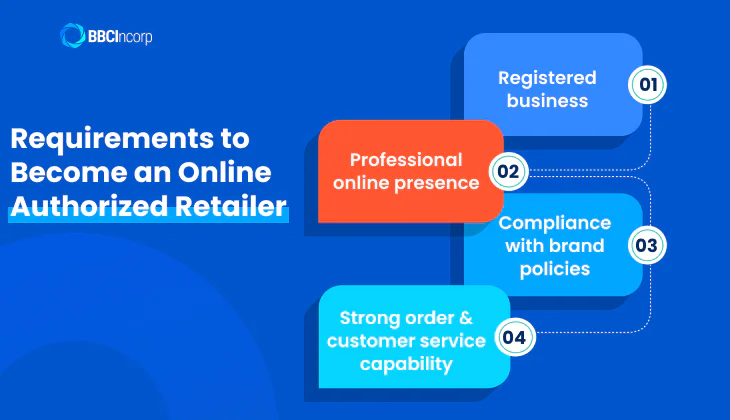
Before approving a seller, brands typically evaluate a few key criteria to ensure you can represent them professionally and consistently:
- Registered business: You need a legally established company with proper tax registration to prove legitimacy and compliance.
- Professional online presence: A well-designed eCommerce website or a credible store on major marketplaces is essential to demonstrate reliability.
- Compliance with brand policies: You must follow rules on pricing (e.g., MAP), product descriptions, and brand image to maintain consistency.
- Strong order & customer service capability: Brands expect you to manage inventory, fulfill orders efficiently, and provide responsive support to customers.
Meeting these requirements helps position you as a trustworthy partner and increases your chances of getting approved.
How the Online Authorized Retailer Model Works
The online authorized retailer model is a structured system that connects brands, suppliers, retailers, and customers in a controlled and reliable way. Each party plays a specific role to ensure product quality, consistent branding, and a smooth buying experience.
- Brand (Manufacturer): Sets policies on pricing, branding, and sales channels; approves qualified retailers.
- Distributor / Supplier” Provides products in bulk to authorized retailers through verified supply chains.
- Authorized Retailer: Purchases from approved sources and sells directly to customers while following brand rules on pricing, product presentation, and service standards.
- End Customer: Buys products with confidence, knowing they are authentic and supported by valid warranties.
To operate successfully, authorized retailers must comply with brand guidelines, maintain consistent listings, and deliver a reliable customer experience. This model helps brands scale while protecting their reputation and ensuring long-term trust.
Step-by-Step Guide to Becoming an Online Authorized Retailer
Becoming an online authorized retailer is a gradual process—you’re essentially proving to brands that you can represent them professionally and consistently. Here’s how it typically unfolds:
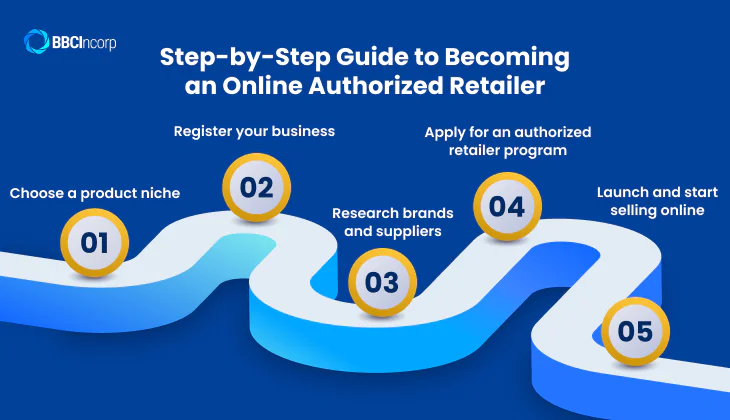
Step 1 – Choose a product niche
Start with a category you genuinely understand or are interested in. When you focus on a clear niche, it’s easier to build credibility, attract the right audience, and position your store as a specialist rather than a general seller.
Step 2 – Register your business
Before reaching out to any brand, make sure your business is set up properly. This includes having a legal entity, tax registration, and any required licenses so brands can see you as a serious partner.
Step 3 – Research brands and suppliers
Take time to find brands that actually support authorized retailer programs. At the same time, look for trusted distributors who can supply products reliably, especially if you’re just starting out.
Step 4 – Apply for an authorized retailer program
Once your foundation is ready, submit your application through the brand’s official channels. Share clear information about your store, target customers, and where you plan to sell—this helps brands evaluate your fit.
Step 5 – Launch and start selling online
After approval, you can start listing products and building your presence. Focus on marketing, customer experience, and consistent operations to grow sustainably and maintain your authorized status.
Where to Find Brands That Accept Authorized Retailers
Finding the right brands to partner with is a key step in becoming an online authorized retailer. While opportunities are widely available, knowing where to look can save you time and improve your chances of approval.
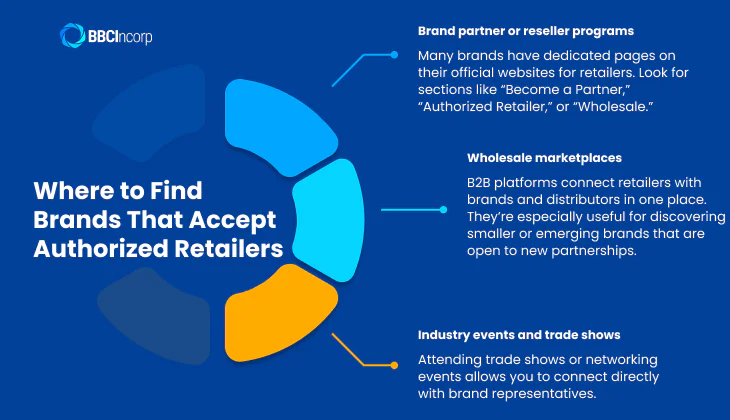
- Brand partner or reseller programs
Many brands have dedicated pages on their official websites for retailers. Look for sections like “Become a Partner,” “Authorized Retailer,” or “Wholesale.” These pages usually outline requirements and provide application forms. - Wholesale marketplaces
B2B platforms connect retailers with brands and distributors in one place. They’re especially useful for discovering smaller or emerging brands that are open to new partnerships. - Industry events and trade shows
Attending trade shows or networking events allows you to connect directly with brand representatives. This can give you a better understanding of their expectations and open doors to exclusive opportunities.
Before applying, always review each brand’s policies carefully, especially around pricing, sales channels, and territory restrictions to ensure they align with your business model.
Business Models for Online Authorized Retailers
Online authorized retailers can operate in several different ways, depending on budget, fulfillment capacity, and long-term growth plans. Some sellers prefer a more traditional setup, while others use flexible models to reduce inventory pressure or expand reach. Understanding these options can help you choose a structure that fits your business.
Traditional Inventory Model: Buying Wholesale and Reselling Online Under Brand Policies
This is the most common setup. The retailer purchases stock upfront from the brand or an approved distributor, keeps the products in inventory, and sells them through online channels under brand guidelines.
- Gives you more control over stock, pricing execution, and fulfillment speed
- Makes it easier to manage product quality and customer experience
- Requires more upfront capital and careful inventory management
Hybrid Models: Authorized Retail + Dropshipping, 3PL, or Brand-Managed Fulfillment
Some retailers stay fully authorized but let a third party handle part of the fulfillment process. For example, a 3PL provider may store and ship products, or the brand itself may manage fulfillment.
- Reduces storage and logistics burden
- Helps smaller retailers scale without holding too much inventory
- Still requires strict compliance with brand rules and service standards
Marketplace-Only Strategy vs Combined Website and Marketplace Selling
Some authorized retailers sell only on marketplaces, while others combine marketplace sales with their own eCommerce website.
- Marketplace-only: easier to get visibility and traffic, but less control over branding and customer ownership
- Website + marketplace: offers more flexibility, stronger brand building, and better customer relationships, but requires more effort to manage
Using Subscriptions, Bundles, and Memberships to Build Recurring Revenue
Authorized retailers can also build recurring revenue instead of relying only on one-time orders. This works especially well for products customers buy regularly.
- Subscriptions: repeat deliveries for replenishable products
- Bundles: curated product sets that increase average order value
- Memberships: loyalty-style programs that encourage repeat purchases
The best model depends on your resources and goals. Some retailers start simple with wholesale resale, then add hybrid fulfillment or recurring offers as their business grows.
Tips to Get Approved as an Authorized Retailer
Getting approved is about showing brands that you can represent them professionally and protect their reputation. Here are some practical ways to improve your chances:
- Build a professional eCommerce presence: Make sure your website or marketplace store looks clean, trustworthy, and complete before applying.
- Focus on a clear niche: Avoid trying to sell everything. Brands prefer retailers who understand a specific category and audience.
- Show your marketing capability: Highlight your traffic sources, social media presence, or any existing customer base to prove you can generate sales.
- Prioritize customer experience: Fast responses, clear policies, and reliable fulfillment signal that you can meet brand standards.
- Follow brand rules consistently: Once approved, stick closely to pricing, branding, and content guidelines to maintain long-term partnerships.
Ultimately, brands choose retailers who can deliver a consistent customer experience while protecting their image across all sales channels.
Common Pitfalls for Online Authorized Retailers
While the authorized retail model offers strong advantages, many sellers run into avoidable issues that can damage both performance and brand relationships. Understanding these risks early helps you operate more sustainably.
- Violating brand policies: Ignoring pricing rules (like MAP), using unapproved images, or selling on restricted channels can quickly lead to warnings—or even losing your authorized status.
- Poor inventory planning: Overstocking ties up cash, while understocking leads to missed sales and unhappy customers. Both signal weak operational control to brands.
- Overdependence on one sales channel: Relying only on a single marketplace can be risky if policies change or your account faces issues.
- Pricing conflicts: Competing aggressively on price may harm your margins and create tension with brands or other authorized sellers.
- Weak customer service: Slow responses, late deliveries, or unclear policies can damage both your reputation and the brand’s image.
- Failing to maintain authorization standards
Approval isn’t permanent. Brands expect ongoing compliance, consistent performance, and regular updates.
Avoiding these pitfalls helps you build a stable, long-term partnership and maintain trust with both brands and customers.
Setting Up Your Online Retail Business with BBCIncorp
Once you understand how to become an authorized retailer, the next step is making sure your business is properly set up. In many cases, especially when working with international brands or distributors, having a legally registered company is not optional—it’s expected. Brands tend to prioritize retailers that operate through formal business entities, as it signals credibility, compliance, and long-term commitment.
This is where BBCIncorp can support your journey, helping entrepreneurs with company formation Hong Kong and company incorporation Singapore in two global business hubs that are popular choices for cross-border eCommerce.
With the right corporate structure in place, you can:
- Build stronger credibility with global suppliers and brands
- Open international business bank accounts more easily
- Operate and scale cross-border eCommerce with greater efficiency
For entrepreneurs planning to grow beyond local markets, setting up your business with the support of BBCIncorp provides a solid legal and operational foundation to partner with international brands confidently.
Understanding how to become an online authorized retailer goes beyond simply sourcing products, it requires building a legitimate, reliable business that brands can trust. From setting up a legal entity to creating a professional online store, each step helps position you as a credible partner in the long run.
By choosing the right niche and maintaining a consistent eCommerce presence, you can build strong relationships with brands and develop a sustainable business model. If you’re ready to take the next step, start researching potential brand partners, review their requirements, and begin preparing your application with confidence.
Frequently Asked Questions
How Do You Become an Online Authorized Retailer for a Specific Brand?
Start by checking if the brand offers a partner or reseller program, then prepare a registered business and a professional online store before applying through their official channel. Approval usually depends on how well you meet their requirements.
Do You Need Your Own Website, or Can You Operate Only Through Marketplaces?
This depends on the brand’s policy. Some allow marketplace-only selling, while others prefer or require a dedicated website to ensure better control over branding and customer experience.
Is Passive Income as an Authorized Online Retailer Realistic?
Not completely. While operations can become smoother over time, you’ll still need to manage orders, customer support, and stay compliant with brand guidelines.
What Is the Difference Between an Authorized Online Retailer, an Authorized Reseller, and a Dealer?
An authorized online retailer focuses on selling through digital channels, a reseller may operate both online and offline, and a dealer often refers to more traditional or industry-specific sales. The main difference lies in how and where they sell.
Disclaimer: While BBCIncorp strives to make the information on this website as timely and accurate as possible, the information itself is for reference purposes only. You should not substitute the information provided in this article for competent legal advice. Feel free to contact BBCIncorp’s customer services for advice on your specific cases.
Industry News & Insights
Get helpful tips and info from our newsletter!
Stay in the know and be empowered with our strategic how-tos, resources, and guidelines.